Sharks, the great predators of the sea, are under great threat of extinction. Each year, more than 70 million sharks are being killed on global scale, and if this situation doesn't change the marine food web could soon be irreparably damaged because sharks are on top of the marine food web.
The shark conservation will need to be improve significantly in years to come, and world definitely needs more protected areas where sharks can roam freely without interference from humans.
The Soneva Group recently announced that its Maldives resort, Soneva Fushi, will serve as regional headquarters for the largest worldwide shark conversation campaign, FINished with Fins. FINished with Fins can boast the support of over 100 of Hong Kong’s taste makers and opinion leaders, 150 celebrities from Singapore, Malaysia, Taiwan and China, and has now added Sonu and Eva Shivdasani, founders of The Soneva Group, to its list of campaigners.
Jonn Lu, Regional Director, Asia Pacific for Shark Savers, who was instrumental in founding the FINished with Fins movement, flew to the Maldives to sign the resort up to the cause. Sonu and Eva have pledged their support to help lobby against illegal shark fishing in their local area as well as on a global stage to help recruit other corporations to support shark conservation, notably other resorts in the Maldives and travel industry leaders.
Back in 2000, their waters were teeming with sharks, however as the years have gone by the shark population has depleted significantly. This led to the Maldivian government commendably introducing a ban on shark fishing in all its waters in 2010. The ban was a great step forward for shark conservation however it only prevented fishermen from hunting sharks up to 12 nautical miles (22 kilometres) off the atoll coasts. This has led to poachers shark fishing and trading outside of the perimeter. Soneva Fushi would like to see the perimeter extended further to make it a lot more difficult for shark fishing and trading to take place and try and put a stop to it once and for all.
The resort is aware of sharks’ role in the ocean’s food chains, and that their depletion is due to the unsustainable demand for shark fin soup in A.
Showing posts with label endangered animals. Show all posts
Showing posts with label endangered animals. Show all posts
Sunday, March 9, 2014

Friday, August 30, 2013
What is the best way to save tigers and leopards from extinction?

The researchers at the Clemson University believe that the best way to save tigers and leopards from extinction is by protecting the corridors the big cats roam to travel between habitat patches.
This latest study implies that forest corridors play a vital role in maintaining the flow of genes between tiger and leopard populations in central India and are main prerequisite for sustaining the genetic variation which is crucial for their long-term survival.
This study was based on first ever gene-flow analysis of these big cats, in which the researchers have analyzed genes of 273 tigers and 217 leopards living in four distinct populations in the 17,375-mile Satpura-Maikal region of central India.
The researchers also pointed to the fact that these big cats live at high densities in the four protected areas. Not all of these areas are connected by contiguous corridors of forest, as there are some that are only connected by sparse and fragmented corridors.
The conclusion based on this study was that contiguous forest corridors were able to maintain a high rate of gene flow implying that the best way to save these big cat species from extinction would be to extend conservation efforts beyond source habitats and to a significantly larger landscape scale.
Monday, April 29, 2013
The ongoing loss of pollinating insects requires quick and decisive action
Insect pollinators such as bees are not only important from environmental point of view but also from economic point of view because the pollination services they provide are worth more than $200 billion each year.
The researchers have calculated that these insects pollinate about 75% of crop species and enable reproduction in up to 94% of wild flowering plants. Their rapid decline in population is therefore a major reason to worry, and there are many ongoing researches that are searching for factors that have contributed to this decline.
UK's Insect Pollinators Initiative (IPI), a £10M research programm, has come up with some very interesting conclusions on this matter. The most important include:
- Insect pollinator populations are declining in many areas of the world, threatening human food supplies and disrupting many important ecosystem functions.
- A variety of interacting pressures are having a big impact on pollinator health, abundance, and diversity with most notable being land-use intensification, climate change, invasive species and the outburst of new diseases.
- A complex interaction between various factors(e.g. lack of food sources, diseases, and pesticides) and biological processes (e.g. species dispersal and interactions) at a range of scales (from genes to ecosystems) is what underpins their general decline in population.
- The world needs to focus more on interdisciplinary research and better collaboration that should provide evidence-based solutions.
- Short-term speaking world should establish effective habitat networks, broadening of pesticide risk assessments, and ensure development and introduction of innovative disease therapies for bees and other pollinators.
Thursday, August 30, 2012
Facts about endangered animals
 The number
of endangered animals is rapidly growing because different environmental issues
such as climate change, pollution, habitat loss and deforestation are becoming
more and more serious.
The latest
reports suggest that today there are more than 5,000 endangered animals in the
world.
In average,
at least one animal species becomes extinct each year according to U.S. scientists.
Habitat
loss and climate change are the two main reasons why many animals are becoming endangered.
Humans are mainly responsible for both of these issues.
Having more
protected areas where animals can roam freely is one of the best solutions to
save many endangered animals from extinction.
The
extinction of animals happened even before humans (for instance, dinosaurs) but
humans have vastly contributed to the current massive biodiversity loss, and
many scientists are already mentioning yet another upcoming mass extinction
event, this time with humans solely to blame.
Humans have
so far caused extinction of at least 500 animal species.
The
currently ongoing conservation efforts won't be enough for many animals to save
them from extinction.
The list of
endangered animals includes some very famous animals such as tigers, cheetahs,
rhinos, penguins, gorillas, pandas, etc.
Today there
are just around 12,400 cheetahs remaining in the wild.
12 penguin
species are considered to be "at risk" or endangered.
African
Cross gorilla is one of the most endangered animals in the world with only 250-300
Cross River gorillas still living in the wild.
Giant
pandas are also at the risk of going extinct, even despite the serious efforts
from the Chinese government. Today there are only about 1600 pandas still
living in the wild.
Many coral
species are also heading to extinction, primarily because of the rapidly rising
acidity of our oceans.
5 great
whale species are also listed as the endangered species.
In many
parts of the world invasive species are responsible for the native species
becoming endangered. Invasive species have even reached our planet’s most
remote areas such as Antarctica.
Three rhino
species, Javan, Sumatran and Black rhinos are being listed as critically
endangered. The factor that mostly contributed to their massive decline in
population is poaching (because of rhino horns that achieve huge prices on
Chinese black market).
Sumatran elephants
also belong to endangered animals with only around 2.500 individuals still
living in the wild. They have been mercilessly hunted because of the valuable
tusks.
Polar bears
are having tough time to survive, mostly because of the climate change issue. In business as usual scenario polar bears
could become extinct by 2050.
Tigers are
also endangered because of the reduced habitats. Current estimates say there
are less than 10000 tigers on entire planet still living in the wild.
Even the
great predators of the sea, sharks, haven't been spared with many shark species
heading to extinction.
Thursday, August 2, 2012
How to help save endangered lions?

Lions are
heading towards being listed as endangered species. A century ago Africa had
more than 200,000 lions living in wild, but with the ongoing shrinking of their
habitats their number has reduced to mere 30,000 today.
Lions are
already listed as 'vulnerable' by the International Union for the Conservation
of Nature, and many environmentalists fear that lions may soon join their
cousins tigers as one of the officially endangered species.
Both tigers
and lions have the same problem causing the decline of their population-
humans, or to be more precise they have less area to roam because humans are
occupying many of their former habitats.
The experts
have calculated that humans have in the last 100 years drove lions away from
the approximately 80% of their previous habitats. Lions may be kings of animals,
but their noble status mean very little to humans who continue to shrink their
habitats.
The additional
problem together with habitat loss is that the remaining populations are often
geographically isolated from one another, which can lead to inbreeding, and
reduced genetic diversity, resulting in further decline in species.
The best
way to protect lions from extinction is to create more protected areas for
them, areas on which they can freely roam without interference from humans.
This is where African governments should step in, and fund the creation of new
animal reserves.
Sadly, the
African governments alone cannot raise sufficient funds to create these
reserves. The rich western world should help Africa save lions from extinction
by providing the necessary funds.
Some environmentalists
believe that even tourism can be of great help in lion conservation efforts. If
African governments were to create more protected areas then tourists could
enjoy classic walking safaris in these reserves, and the money they would spend
could be used to fund costs connected with these reserves. Of course, this only
under the condition that these tourists do not interfere too much with the lion's
way of life, meaning that everything has to be done under the strict guidance
of professionals.
Thursday, June 28, 2012
California condors could be again in trouble

California condors could find themselves once
again in serious trouble just like this was the case in 1980s. In 1987 there
were only 22 condors remaining in the wild, and they were captured and bred in San Diego Zoo Safari Park where
conservationists managed to stop further decline in condor population. Today
there are around 400 California
condors in the wild.
The main
factors that led to serious decline in California condor population were
habitat loss, poaching and lead poisoning. Sadly, by the current looks of it
lead poisoning could once again spell huge danger for condors in the wild.
In the
latest study led by the environmental toxicologists at the University of California
the scientists have expressed fear that California Condors could once again
find themselves in trouble because of the lead poisoning from ammunition.
Condor’s
main diet includes carcasses of large mammals such as deer. While feeding on these
carcasses condors can ingest fragments of lead bullets leading to lead
poisoning and eventual death.
Myra
Finkelstein, a research toxicologist at UC Santa Cruz said that: „California
condors are tagged and monitored, captured twice a year for blood tests, and
when necessary treated for lead poisoning in veterinary hospitals, and they
still die from lead poisoning on a regular basis“.
Not only
have scientists found high lead isotope ratios in blood of free-flying condors,
they have also discovered excessive lead levels in feathers, which led them to
conclusion that birds are in fact chronically lead poisoned.
What this
means is that without the continued releases of captive-reared birds and
interventions to treat lead-poisoning, the condor population would again experience
serious decline in population, and head to extinction.
The current
measures of intensive management are helping condors to maintain their current
numbers but nonetheless something has to be done to solve this worrying lead poisoning
issue.
In 2008, California partially
banned the use of lead ammunition in condor habitat. This ban has so far not
fulfilled its purpose and has not been able to reduce the lead levels in blood
of the condors.
Thursday, May 10, 2012
How do animals become endangered?

There are
many endangered animals in all corners of the world, and science is already
talking about our planet being on course for yet another mass extinction event,
this time though not because of the asteroid hitting the earth but because of
many different environmental issues.
The animals
become endangered once the environment they live in starts its deterioration in
form of one or more environmental issues. These environmental issues include
climate change, habitat loss, pollution, deforestation, etc. Do you know what
all these environmental issues have in common? They all originate from us, the
mankind.
Instead of
being the guardians of our planet we seem to be doing our best to destroy it.
The ongoing biodiversity loss is really a major reason for concern but this
issue doesn't seem to be giving politicians many sleepless nights.
All animals
are equally important, mammals, reptiles, birds, insects, they all play their
important role in Earth's biodiversity. The main motto of earth's biodiversity
is very simple – every species counts.
Climate
change is the biggest environmental issue of our time. Earth is warming fast and
this is causing big damage to animals that live in sensitive environments such
as polar regions or tropical forests. Many of these animals are already
experiencing decline in population and if world continues to ignore climate
change issue they'll likely forever perish from the face of the Earth.
Pollution
has many different forms, and many animals are dying because of it. Some
species have already become extinct because of excessive pollution like Yangtze
river dolphin and many other animal species will experience the same destiny if
world fails to decrease current levels of environmental pollution.
Habitat
loss is causing a major decline of many animal species. The human population is
constantly growing so humans are moving to new areas, shrinking habitats of
many animals in the process. Take majestic Bengal
tigers as a perfect example. Their population is constantly decreasing because
of the expansion of Indian villages that are spreading to their habitats,
leading to frequent conflicts.
Deforestation
is also contributing to loss of many animal species because forests and
rainforests are areas with very rich biodiversity and once trees are cut down
many animals lose their homes.
Poaching is
particularly worrying issue because poachers frequently hunt and kill already
endangered species such as rhinos and elephants. Some well known animal species
count less than 100 individuals because of poachers.
How can
animals survive with so many different environmental issues all against them?
And even more important, how do we plan to survive without animals?
Conservation
efforts lack global character. The environmental issues have reached global
level which means that conservation efforts also need to be planned on global
level if we really want to avoid yet another mass extinction event.
We need
animals and we need plants. We can't survive without them. Diverse ecosystems,
rich with many animal and plant species, are key for our future wellbeing.
Thursday, February 2, 2012
Endangered animals – Cross River gorilla
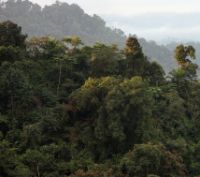 Cross River gorilla can be found only on the border between Nigeria and Cameroon, in mountainous forests, and is one of one of the world's 25 most endangered primates according to the IUCN Primate Specialist Group, and the most endangered of all African great ape species.
There are only 250-300 Cross River gorillas still left in the wild. The main reasons behind their sharp decline in the last few decades have been habitat loss and intense hunting for bushmeat as they have the misfortune to live in a region with high human population density and heavy natural resource exploitation.
Conservation work to protect these gorillas is yet to achieve significant success even despite major effort from Cameroon government that has even created the Takamanda National Park on the border with Nigeria, as an attempt to protect these gorillas.
The good news recently came from the Wildlife Conservation Society. According to their latest satellite study Cross River gorillas have more suitable habitats to roam around than previously thought. The area now known to be occupied by gorillas is more than 50 percent larger than had previously been thought and with the proper steps could lead to recovery of gorilla population.
WCS conservationist Andrew Dunn said: "The good news for Cross River gorillas is that they still have plenty of habitats in which to expand, provided that steps are taken to minimize threats to the population."
Hopefully, this and similar researches will lead to more effective conservation of these majestic animals and ensure there is a future for this gorilla species.
Thursday, January 12, 2012
Elephants must be better protected in 2012
 Elephants are still being mercilessly hunted and killed because of their tusks. The recent proof for this comes from Malaysia where customs officials have seized elephant tusks worth more than $750,000. These tusks originate from South Africa.
2011 was a really bad year for African elephants with around 23 tonnes of ivory seized, which in rough numbers equates to 2,500 dead elephants. This refers only to seized ivory so you can imagine the whole scale of dead animals.
Illegal hunting and killing of elephants must stop - elephants are already in trouble because of reduced habitat so the last thing they need right now is well organized poaching gangs hunting them. The black market for ivory sadly does not think so.
The black market for ivory is in constant demand for more elephant tusks and is constantly growing. The current estimates say that the worth of illegal ivory market is more than $12 billion.
The number of elephants is on constant decline, today there are less than half million elephants still left in the world while century ago there was more than 10 million elephants.
Trade in ivory was banned in 1989 but sadly this hasn't done much good because elephant poaching still continues.
The saddest fact in the whole story is that on global level more tusks were seized in 2011 than in the previous 22 years.
The poverty and hunger on Black continent make things easier for poachers and elephants are paying this with their lives. It's a sad world we live in. Really sad.
Thursday, December 15, 2011
Endangered Species Act not comprehensive enough
 The world is experiencing huge biodiversity loss with many species being brought at the very brink of extinction. Many scientists have already issued warnings about our planet entering yet another mass extinction event, this time caused by human race and best characterized by climate change issue.
The number of endangered species is constantly growing so it is really no surprise that Endangered Species Act (ESA) is anything but comprehensive and therefore does not offer protection for many endangered species.
The latest research from the scientists at the University of Adelaide has compared the ESA list of endangered species with the world's leading threatened species list, the International Union for the Conservation of Nature (IUCN) Red List.
Their conclusion was that 40% of birds, 50% of mammals, and 80-95% of other species such as amphibians, gastropods, crustaceans, and insects that were included on IUCN list didn't make it to ESA list.
If we translate this into raw numbers then this means that 531 American species on the IUCN Red List haven't made it to the ESA protection list. Or in other words U.S. environmental agencies still have awful lot to do in order to save many endangered species from going extinct.
The Endangered Species Act certainly played its role in protecting many animal species since being established in 1973 but its currently covered number of endangered animals seems to be anything but adequate.
EPA hasn't lost its power over the years, it has most of all lost speed needed to include species before they become critically endangered.
There still hasn't been any major governmental evaluation of the ESA's coverage which is really no surprise when you consider the fairly low political impact of environmental issues in United States.
As of November 2011 only twenty-three species were delisted from ESA list due to recovery in population.
The ESA is administered by two federal agencies, the United States Fish and Wildlife Service (FWS) and the National Oceanic and Atmospheric Administration (NOAA).
Thursday, August 25, 2011
Why are Sumatran tigers endangered?
 Sumatran tiger, as the name suggests, has its natural habitat in the Indonesian island of Sumatra. Sumatran tigers are critically endangered and according to the latest estimates there are currently less than 500 Sumatran tigers living in the wild.
The main reason why Sumatran tigers are at the very brink of extinction is a rapid deforestation of Indonesian rainforests. Deforestation is taking heavy toll in Indonesia for more than a decade now and this has resulted in fewer habitats for these majestic animals.
Despite the fact that the Indonesian Forestry Ministry has established programs for tiger conservation such as the foundation of Senepis Buluhala Tiger Sanctuary, Sumatran tigers still haven't been able to recover population, mostly because the Indonesian rainforests is still being heavily destroyed by illegal logging.
Without the rainforest, which is a home of these majestic animals, Sumatran tigers will soon go extinct. The worst part in this story is that Indonesian government has so far had very few successes when dealing with illegal logging which makes conservation efforts almost impossible.
The habitat loss has also led to frequent conflicts between tigers and people because many tigers no long have their natural habitats and are entering many Indonesian villages. Indonesian government has so far found it very hard to help protect both tigers and human settlements and this has lead to many tiger deaths.
Deforestation is not the only threat to survival of Sumatran tigers. Poaching is also a major threat to Sumatran tigers even despite the increased conservation efforts. Many poaching gangs are highly organized, driven by the high demand for tiger organs, skin and bones on Asian black market and the protected areas still fail to provide safe living area for tigers.
The largest Sumatran tiger populations live in the Kerinci Seblat National Park and Gunung Leuser National Park.
Thursday, July 21, 2011
Why are sea turtles in big trouble these days?
 Sea turtles are finding it very hard to survive these days. They are often being illegally hunted because of their meat which is regarded as delicacy in many exquisite restaurants and they are also finding it very hard to cope with the climate change and its side effects such as cyclones, rising seas and warming temperatures.
The latest study by the British scientists at the University of Exeter has found out that climate change and illegal hunting are not the two only threats which threaten sea turtles' survival. Large and even small-scale fisheries are also regarded as big threats to their survival. Why is that?
In their latest study scientists focused on small-scale fisheries in Peru, South America. By analyzing the available data scientists concluded that many sea turtles which originate from nesting beaches in Australia, Costa Rica, Mexico and the Galapagos, are likely to be captured each year as a bycatch while they reside in Peru's waters,
The role of large scale fishing in sea turtles decline has been known for quite some time but this is the first study which shows that small-scale fisheries can also have devastating effect on turtles and other marine life.
The coastal area around Peru is one of the favorite destinations for five species of sea turtles, including loggerhead, green, leatherback, olive ridley and hawksbill turtles. On the other hand, Peru today has around 10,000 fishing vessels and 37,000 people working in fisheries.
Is it possible to keep both fishermen and sea turtles happy? The scientists believe that this could be achieved if fisheries were to change their fishing practices by for instance introducing circle hooks and dehookers to line fishing and using net illumination.
Sea turtles play extremely important role in marine food chain. Their favorite food includes kelp and other sea grass and this is extremely important because sea grass must be kept short to remain healthy (beds of healthy sea grass are essential breeding and development areas for many marine species).
Fisheries will have to pay more attention to these lovely creatures because their decline in population could very soon result in less caught fish.
Thursday, July 7, 2011
Why are rhinos endangered?
 There are three rhino species, Javan, Sumatran and Black rhinos that are being listed as critically endangered. Javan and Sumatran rhinos that live in Indonesia are at the very brink of extinction with only around 50 Javan and around 250 Sumatran rhinos still left in the wild. The Black rhino population that lives in South Africa currently counts around 4000 rhinos.
Poaching is the main reason why rhinos are endangered. Poachers hunt and kill rhinos because of their horns and then they sell horns to black market in China where it is being in heavy demand by the Chinese traditional medicine.
In the last 18 months poachers killed more than 500 rhinos in South Africa which means that conservationists are so far finding it very hard to compete with well organized poaching gangs. Particularly worrying is the fact that most of these killings have been done in world-famous Kruger National Park.
Poachers often use helicopters and automated weapons which makes conservation efforts extremely difficult. South African government is committed to stop this slaughter but poachers are still not stopping their massacre because they are driven with the very high demand for rhino horns on Asian black market. The government has even ordered military to begun patrolling Kruger in an effort to crackdown on poaching.
The rhinos, despite their gigantic size, are relatively easy target for poachers. This is mostly because they visit water springs daily which means that they are very easily killed by poachers while taking a drink.
Rhinos won't be safe as long as there is a huge demand on Asian black market for rhino horns. The traditional Chinese medicine believes that rhino horns are very effective on fevers and can even save life in some cases, and fighting against the tradition (whatever the tradition may be) is never easy.
It is really sad that humans are rhino’s only natural predators. Killing animals for money in the 21st century isn't something our civilization should be proud of and this brutal poaching needs to be stopped. One way or another.
Thursday, June 30, 2011
Less fishing means more corals
 Corals have recently experienced serious decline in population mostly because of climate change which is not only major culprit for coral bleaching events but has also contributed to the rise of extreme weather events such as hurricanes which are also causing huge damage to coral reefs.
The researchers are already involved into very lively discussion about the possible solution(s ) to protect coral reefs from climate change. The latest proposal comes from the University of Exeter in very simple form of less fishing. The researchers at the University of Exeter believe that by establishing marine protected area which could stop people from fishing would help corals survive the effects of a changing climate by more than 50 years.
Corals play extremely important role in proper functioning of the marine food chain so their loss would cause huge damage to marine biodiversity leading to irreversible changes in many marine ecosystems.
Corals are extremely vulnerable to even the slight increases in sea temperatures. The scientists have calculated that a temperature increase of just one degree Celsius above average for a few weeks is enough to kill off 95%of individual corals. Many scientists have already issued warning that entire coral population will disappear by the end of this century if world fails to massively reduce greenhouse gas emissions.
According to this latest discovery one effective way to help corals cope with climate change would be to protect the fish that live around Caribbean coral reefs. Why are fish so important for survival of corals? It is because there are many fish species such as parrotfish which graze on the algae which competes for space with corals. With less algae around coral reefs can recover more quickly.
The researchers have already showed that protecting parrotfish gives coral more time for recovery, and time is certainly the most important factor in equation of how to save corals.
The success of coral reefs conservation will play a vital role in preserving the marine biodiversity for years to come. Conservation managers need all the help they can get because they have very limited amount of options available to them, particularly if the world fails to agree on new international climate deal. Protecting fish species such as parrotfish might just give corals enough time to escape from the brink of extinction.
Thursday, May 19, 2011
What is the best way to save endangered animals?
 The number of endangered animals is constantly rising and there is no magic formula that could save these species from going extinct. The best way to save endangered animals from going extinct is to identify key factors that threaten their survival. In most cases the key threats to animal survival are humans, or to be more precise the human activity.
Habitat loss and climate change are usually the two most mentioned threats behind the huge decline of many animal species, and what causes both habitat loss as well as climate change is human activity.
Since the start of industrial revolution humans have been doing tremendous damage to environment, and climate change is the most obvious sign of the current environmental condition in our planet. If we continue this path the animals won't be the only ones that will find it extremely hard to survive, and our future generations will remember us as the generation that started the total deterioration of our environment.
The endangered animals list includes many famous animals such as gorillas, tigers, polar bears, and many more famous animals will join this list if world fails to successfully tackle this variety of environmental issues.
Our world today is one huge environmental mess and cleaning this mess will be anything but easy. This is because there are several different environmental issues that need to be solved simultaneously and this is extremely hard to achieve, particularly since world still seems to be lacking global political will needed to solve these issues.
Why simultaneously you might ask? This is because environmental issues have become interconnected and in order to solve one you also need to put several other environmental issues into equation. For instance if we want to solve biodiversity loss issue we need to reach several different issues such as climate change, pollution, habitat loss, etc. The complexity of these issues makes this task monumental.
The conservation efforts to save many animals from going extinct have been admirable but sadly still inadequate, mostly due to the lack of adequate funds needed not only for further researches but also for creation of conservation parks. A few good news every now and then has been largely overshadowed by the numerous reports about the decline of large number of animal species.
Intensifying conservation efforts won't be enough, and world will have to develop global „environmental conscience“ prior to having any success in saving many animals from going extinct. Ecology needs to become at least equally important as economy if we are to see success in this field.
The green color should symbolize the nature and not the almighty dollar. Hopefully we'll be able to realize this before it is too late.
Thursday, April 28, 2011
Huge decline of amphibians is a major threat to global biodiversity
 Many amphibian species are at the brink of extinction. The decline of amphibians is happening in all corners of the world and scientists still do not fully understand the reasons behind such excessive population loss.
There could be many different causes behind the decline of amphibians such as habitat loss, environmental pollution, invasive species, predation, reproduction, disease and of course the ever present climate change.
Some scientists believe that this rapid decline of amphibians is a clear sign of yet another major extinction episode in the earth's history. The current rate of their extinction has reached horrific level as it is happening more than 200 times faster than that of the average extinction rate.
In the last century or so, our environment (and our planet in general) has experienced severe environmental changes any by the current looks of it amphibians are among the species least ready to adapt to these changes.
Dr Andrew Blaustein, a professor of zoology at Oregon State University, has colorfully stated that one of the main reasons for amphibians struggle to keep up with these changes is the fact that "with a permeable skin and exposure to both aquatic and terrestrial problems, amphibians face a double whammy".
Science is running out of time to save amphibians. So many different extinction causes make this problem extremely complex and science is so far finding it very hard to come up with the adequate answers.
While some causes are natural the others originate from humans. In many areas of the world human activity represents a major hurdle to amphibian adaptation, the one that only few amphibian species will be capable to overcome.
Amphibians are ecological indicators and their massive decline in the last few decades is a major threat to global biodiversity. The worst part is that these species are often ignored and overlooked when it comes to conservation. Existing conservation efforts as well as scientific efforts are not enough and by the current looks of it only a miracle can stop their further population decline.
Friday, April 15, 2011
The main reasons behind penguin decline in Antarctica
 Several recent studies have confirmed that a number of penguin species at Antarctica, especially chinstrap and Adelie penguin are declining, and the main reason for this is not enough food, which is yet again connected to climate change.
The penguin's diet mostly consists of Antarctic krill, a little shrimp-like animal. Krills belong to the most abundant species on our planet (there can be sometimes up to 30,000 krills in a cubic-meter of seawater) but their abundance has started to severely reduce for penguins because of not only warmer waters but also because of the increased competition from whales and seals who also have krills on their menu.
Krills play extremely important role in Antarctica's ecosystems, and their abundance is the key in preserving the unique Antarctica's biodiversity.
The before mentioned chinstrap and Adelie penguin have been experiencing a decline in population by up to 50% since the mid 80s.
The main difference between these two penguin species is the fact that Adelie penguins love ice while chinstrap penguin avoid ice. Since both of these penguin population experienced severe decline in last 20-30 years the scientists concluded that the loss of ice cover is not the main reason behind their decline but rather the lack of krill.
This was clearly confirmed by comparing the numbers of these two penguin species in the 19th to mid-20th Centuries (when penguin population was the highest because humans almost extirpated seals, baleen whales and some fish which meant more krill for penguins) and today.
The abundance of krill for penguins is not only reduced because of many competitors but also because of climate change. Warmer waters and less ice cover is altering the adequate physical conditions necessary to sustain large krill populations.
If warming continues there will be less krill, and with it the less penguins in Antarctica.
Monday, March 28, 2011
Can tigers still be saved?
 Tigers certainly belong to a list of the most famous animals threatened with extinction. The main reasons for their rapid decline in population are habitat loss and poaching. The latest report estimate there is still around 3000 tigers living in the wild, with half of that number living in India.
In the sea of bad news regarding the survival of tigers many environmentalists have started fearing the worst, namely the extinction of this majestic animals. Can tigers still be saved?
If the latest news are true then there are certainly some encouraging signs that give hope about world being able to save tigers from going extinct. According to a new official census published in Delhi the number of tigers in India has risen for the first time in ten years, with the total number of tigers in India climbing to 1550, up by 10% from the 2008 numbers.
Some environmentalists dispute this census by claiming that it also included the vast jungle and swamp areas of the Sunderbans, an estuary zone on the Bay of Bengal that had previously proved to difficult to properly survey. On the other hand some environmentalists even claim that the methods used for this census allowed the same tiger to be counted more than once.
Though these latest figures are far from guaranteeing total certainty regarding the actual number of tigers they are at least giving this issue some positive note.
It also has to be said that the main problems still remain, despite the increase in tiger population. The increase in human population is constantly shrinking tiger habitats which leads to frequent conflicts between tigers and humans. Poaching is still a major threat because the demand for traditional medicines in China (which tigers are important part of) is growing due to the China's economic rise.
While we shouldn't be looking at things only from negative perspective we also have to remain realistic about it. Tiger conservation will be anything but easy, and tigers are still far away from being saved from extinction.
World's biggest cat is sadly still in big trouble.
Sunday, February 20, 2011
Why does it have to be animals vs people?
 In modern world animals are finding it extremely hard to survive. This is mostly because of the rapid human population growth and the fact that more people means less habitats for the animals. The fate of many animals depends on whether humanity will be able to stop huge biodiversity loss. So far, there have been very few reasons to remain optimistic about it, and it is very likely that many animals will go extinct in years to come.
The conservation efforts, despite the remarkable work of many people across the globe are simply not enough because habitat loss is not the only problem for survival of many animals, there are other environmental issues too such as climate change, pollution and deforestation. Particularly worrying is a climate change issue because scientists believe that the ongoing changes in climate are happening too fast not leaving animals enough time to adapt.
World leaders are just not doing enough to stop many animals from going extinct. They are doing plenty of talk, that's for sure, but when it comes to actual action all of the sudden they become extremely silent. The fate of many animals depends on whether world leaders will find the way to stop biodiversity loss, and this cannot be done without first solving the environmental issues such as climate change and habitat loss.
International climate change deal is still far from being agreed upon, while there is also not enough protected areas (animal sanctuaries) around the globe that would stop habitat loss and make conservation efforts more successful.
Animal protection laws need to be improved on global scale because very little can be done for wildlife without the adequate environmental legislation. Preserving wildlife means preserving biodiversity, and preserving biodiversity means preserving the natural resources needed for our own survival.
Animals are key part of our ecosystems on which our existence depends, and we must preserve these ecosystems for our future generations. We must find the ways to transform current animals vs people scenario into animals and people scenario because this is what Mother Nature says about it. And Mother nature, as always, knows best.
The list of endangered animals includes not only polar bears but also whales, turtles, corals, tigers, bald eagles, and many other well known animals.
These animals need us and we need them. It's as simple as that.
Monday, February 7, 2011
Endangered animals in Madagascar - Fossa
 Fossa is a cat-like predator endemic to Madagascar that is in great danger of becoming extinct, and the worst part is that this largest carnivore in the island of Madagascar is still not listed as endangered species.
Fossa adults have a head-body length of 70–80 cm (28–31 in) and they usually weigh between 5.5–8.6 kg (12–19 lb), and like with many other cat species males are larger than the females.
The main reason why fossas could be soon heading for extinction is habitat loss because their preferred habitat (the forests) are constantly shrinking in Madagascar, and they are finding it more and more difficult to find prey. Fossa is the predominant predator of lemurs but its prey include all small to medium-sized animals.
Official estimates suggest that there is little above 2000 fossas still left in the wild but there are some scientists who say that their actual number is in fact much lower.
The additional problem are also the frequent conflicts with villagers who not only kill fossas to protect their livestock but also hunt fossa for meat. For instance, 12 fossas had been killed recently by people living in just eight villages, to prevent the fossa from stealing their chickens.
German scientist Mia-Lana Lührs who spent last couple of years studying fossas in 2007 recorded 18 different males regularly visiting a particular tree that male and female fossa use to mate in, in 2008, this number decreased to 14 males, and in 2009 just ten. Last year, she only recorded two males.
Will there be any fossa left by the end of this year?
Subscribe to:
Posts (Atom)